Your website is underperforming, looks outdated, or isn’t delivering the results you expected. You know something needs to change, but should you invest in a complete website redesign or would a website refresh be sufficient? This is one of the most common dilemmas business owners face when evaluating their online presence.
Understanding the difference between these two approaches—and knowing which one your business actually needs—can save you thousands of dollars and months of work while ensuring you get the results you’re looking for.
What is a Website Redesign?
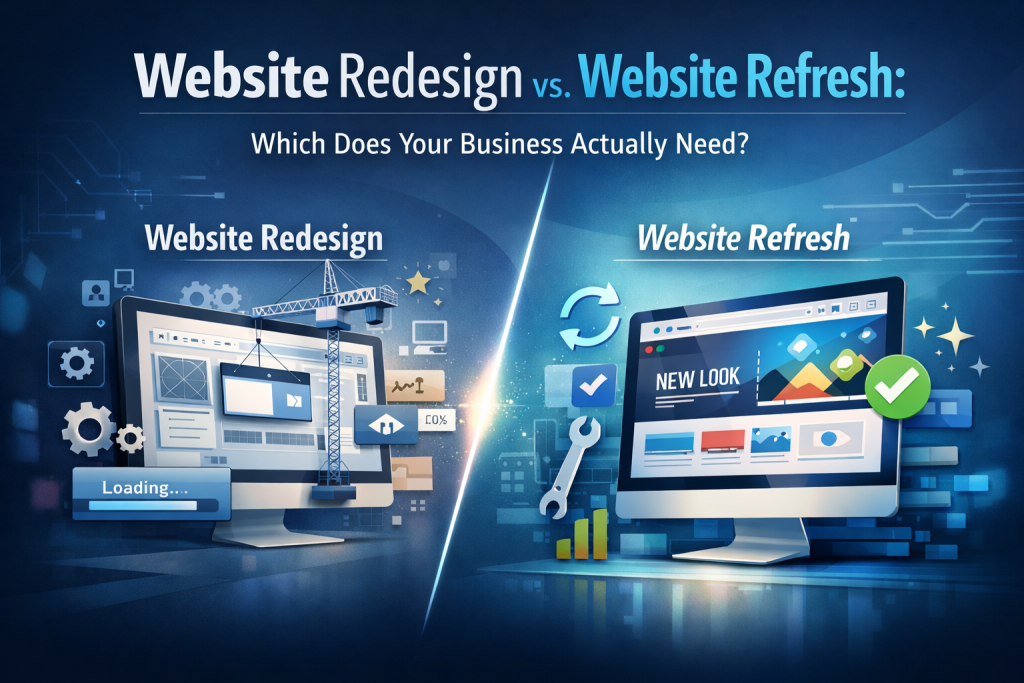
A website redesign is a complete overhaul of your existing website. Think of it as tearing down an old building and constructing a new one from the ground up. This comprehensive process involves:
- Restructuring your website’s information architecture and navigation
- Redesigning the visual identity, layout, and user interface
- Rewriting or significantly updating content strategy
- Implementing new features and functionality
- Potentially migrating to a new platform or content management system
- Rebuilding the backend code and database structure
A full redesign typically takes several months and requires significant investment, but it allows you to address fundamental issues with your website’s structure, technology, and user experience. When you work with experienced professionals for website development services, they can help you build a modern, scalable foundation that serves your business for years to come.
What is a Website Refresh?
A website refresh, on the other hand, is more like renovating specific rooms in your house while keeping the foundation intact. It involves making targeted updates to improve aesthetics and functionality without changing the core structure. A refresh might include:
- Updating colors, fonts, and visual elements to align with current branding
- Refreshing images, graphics, and multimedia content
- Improving specific page layouts or sections
- Updating content to reflect current offerings and messaging
- Making minor functionality improvements
- Optimizing existing pages for better performance
A website refresh is typically faster and more cost-effective than a complete redesign, often taking just a few weeks to implement. It’s an excellent option when your website’s foundation is solid but needs cosmetic and content updates to stay current.
Signs Your Business Needs a Full Website Redesign
Consider investing in a complete redesign if you’re experiencing any of these critical issues:
Your Website Isn’t Mobile-Responsive
If your website doesn’t work properly on smartphones and tablets, you’re losing more than half your potential audience. A responsive redesign is essential in today’s mobile-first world.
Your Technology is Severely Outdated
If your website is built on deprecated technology, lacks security updates, or can’t integrate with modern tools and services, a redesign is necessary to avoid security vulnerabilities and functionality limitations.
Your Business Model Has Changed Significantly
When your business has pivoted, expanded into new markets, or completely changed its service offerings, your website architecture needs to reflect these fundamental changes.
Navigation and User Experience Are Problematic
If users consistently struggle to find information, abandon key conversion paths, or complain about confusing navigation, your information architecture needs to be rebuilt from scratch.
You’re Losing Business to Competitors
When prospects specifically mention that competitor websites are more professional, easier to use, or more trustworthy, it’s time for a complete transformation.
Signs Your Business Needs a Website Refresh
A website refresh may be the perfect solution if you’re dealing with these less critical issues:
Your Branding Has Evolved
If you’ve updated your logo, colors, or brand identity but your website still reflects the old look, a refresh can bring everything into alignment without rebuilding the entire site.
Content is Outdated But Structure Works
When your website functions well and users can navigate effectively, but the content, images, or messaging feel stale, a refresh with ongoing website maintenance services is the efficient choice.
Minor Design Elements Feel Dated
If specific design elements like buttons, icons, or section layouts look old-fashioned but the overall structure is sound, targeted updates can modernize your appearance quickly.
You Need to Improve Specific Conversion Points
When most of your website performs well but specific pages or elements aren’t converting, a refresh focusing on those areas can deliver results without unnecessary work.
Making the Right Choice for Your Business
The decision between a redesign and refresh ultimately depends on your specific situation, budget, and business goals. Here’s a practical framework to guide your decision:
Choose a redesign when: Your website has fundamental structural, technical, or user experience problems that can’t be fixed with surface-level changes. You’re willing to invest more time and resources for a comprehensive solution that will serve your business for the next 3-5 years.
Choose a refresh when: Your website’s foundation is solid, but cosmetic elements or content need updating. You need to make improvements quickly without the extended timeline of a full redesign. Your budget is limited but you still want meaningful improvements.
Consider also that these aren’t mutually exclusive options. Many businesses benefit from a phased approach—starting with a refresh to address immediate concerns while planning for a more comprehensive redesign in the future when resources allow.
Conclusion
Whether your business needs a complete website redesign or a targeted refresh, the most important step is making an informed decision based on your actual needs rather than assumptions. By honestly assessing your website’s current state, understanding your business objectives, and considering your resources, you can choose the approach that delivers the best return on your investment.
Remember that your website is never truly \”finished\”—it’s an evolving asset that should grow with your business. Regular evaluation and strategic updates, whether through major redesigns or periodic refreshes, ensure your online presence continues to effectively represent your brand and serve your customers.