Your domain name is often the first interaction potential customers have with your business online. It’s more than just a web address—it’s a crucial part of your brand identity, marketing strategy, and digital presence. Yet many Philippine business owners underestimate its importance, leading to costly mistakes that can affect their credibility and search engine rankings for years to come.
Whether you’re launching a new business website or reconsidering your existing domain strategy, understanding how to choose and manage your domain name properly can make a significant difference in your online success.
What Is a Domain Name and Why Does It Matter?
A domain name is your unique address on the internet—the text that users type into their browser to find your website. Think of it as your digital storefront’s location. Just as a physical store needs a memorable, accessible address, your online business needs a domain name that customers can easily remember and trust.
Your domain name impacts several critical aspects of your business:
- Brand Recognition: A well-chosen domain reinforces your brand identity and makes your business more memorable
- Credibility: Professional domain names inspire trust, while poorly chosen ones can raise red flags
- SEO Performance: Your domain name contributes to search engine rankings and can include relevant keywords
- Marketing Effectiveness: Easy-to-remember domains improve word-of-mouth marketing and offline advertising success
How to Choose the Right Domain Name for Your Philippine Business
Selecting the perfect domain name requires balancing multiple factors. Here are the essential guidelines to follow:
Keep It Short and Memorable
Shorter domain names are easier to remember, type, and share. Aim for 6-14 characters when possible. Avoid complex words, unusual spellings, or numbers that could confuse potential visitors. If someone hears your domain name once, they should be able to type it correctly without asking for clarification.
Make It Brandable and Unique
Your domain should reflect your business identity while standing out from competitors. Avoid generic terms that could apply to any business in your industry. Instead, choose something distinctive that represents your unique value proposition. When preparing for your website development project, your domain name should align with your overall brand strategy.
Consider Keywords Carefully
While including relevant keywords can help with SEO, prioritize brand value over keyword stuffing. A domain like \”ManilaBestCheapWebDesignServices.com\” is far less effective than a brandable name with strategic keyword usage. If keywords fit naturally with your brand, include them; otherwise, focus on creating a strong, memorable identity.
Avoid Hyphens and Numbers
Hyphens and numbers create confusion when sharing your domain verbally. People won’t know whether to spell out numbers or use digits, and hyphens are easily forgotten. These elements also make your domain appear less professional and harder to remember.
Understanding Domain Extensions: .ph vs .com vs Others
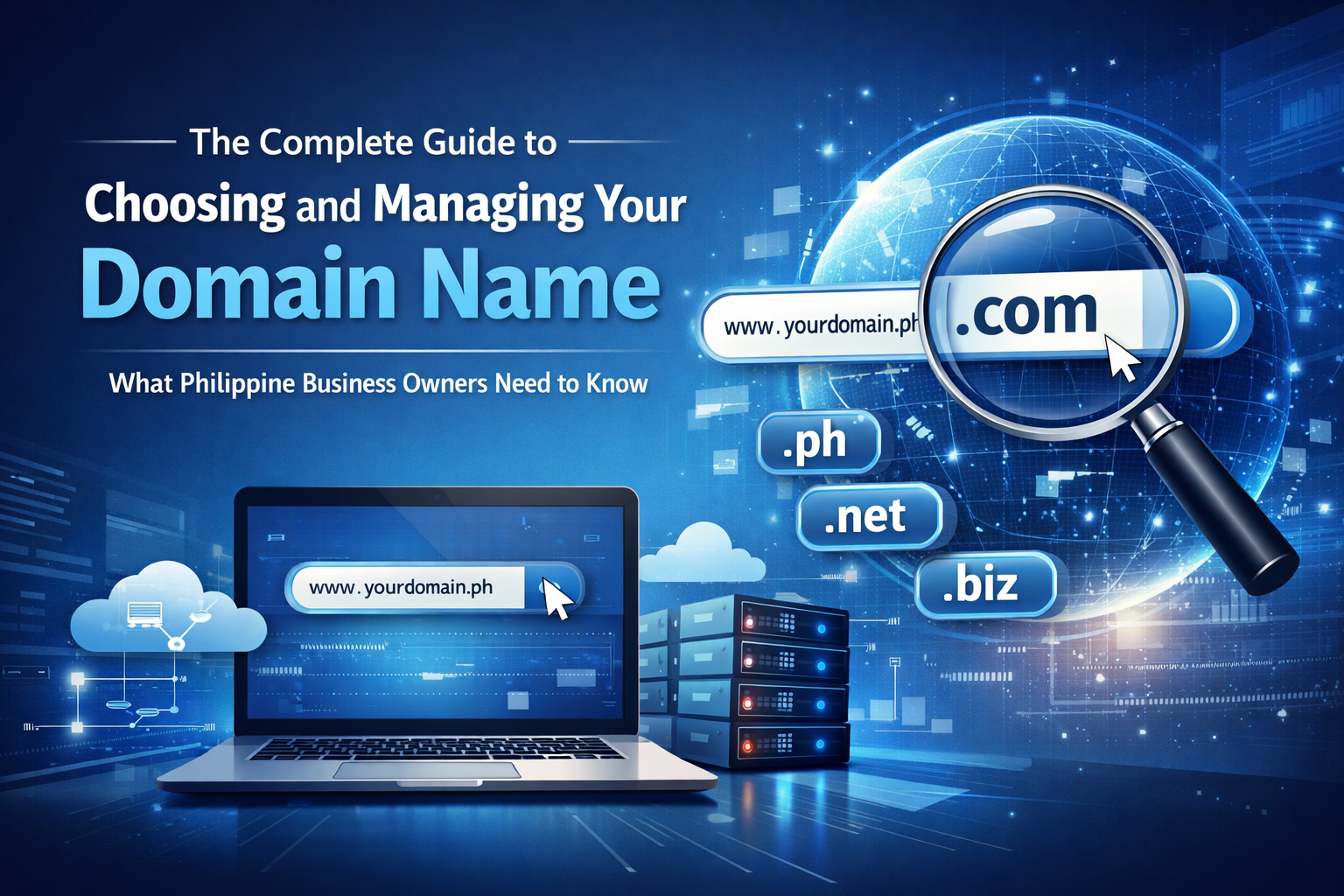
The domain extension (also called a top-level domain or TLD) is the suffix at the end of your domain name. For Philippine businesses, the choice typically comes down to several options:
.com.ph and .ph Extensions
The .ph extension specifically identifies your business as Philippine-based, which can benefit local SEO and build trust with Filipino customers. The .com.ph variant is more commonly used for commercial entities. These extensions signal to search engines and users that your business serves the Philippine market, which aligns well with modern website strategies for Philippine businesses.
.com Extension
The .com extension remains the most recognized and trusted globally. If you plan to expand beyond the Philippines or serve an international audience, .com might be your best choice. It’s also the extension most people assume when they can’t remember a full domain name.
New TLDs (.online, .store, .tech, etc.)
While newer extensions like .online, .store, or .tech can be creative and sometimes more available, they don’t carry the same universal recognition as .com or country-specific extensions. Use these cautiously and only if they strongly support your brand.
Domain Registration Best Practices
Once you’ve chosen your domain name, proper registration is crucial:
- Register for Multiple Years: Longer registration periods (3-5 years) signal stability to search engines and prevent accidental expiration
- Enable Auto-Renewal: Losing your domain due to forgotten renewal can be devastating for your business
- Protect Your Privacy: Consider domain privacy protection to keep your personal information from appearing in public WHOIS databases
- Register Similar Variations: If budget allows, secure common misspellings and alternative extensions to protect your brand
- Keep Registration Information Current: Ensure your contact information is always up-to-date to receive important renewal notices
When working with professional website development services in the Philippines, your developer should guide you through the domain registration process and help ensure everything is configured correctly from the start.
Ongoing Domain Management and Maintenance
Domain management doesn’t end with registration. Your domain requires ongoing attention as part of your overall website maintenance strategy:
- Monitor Expiration Dates: Set calendar reminders well before renewal deadlines, even with auto-renewal enabled
- Review DNS Settings: Ensure your domain’s DNS records are properly configured and updated when needed
- Maintain Registrar Account Security: Use strong passwords and two-factor authentication to prevent domain hijacking
- Keep Contact Information Updated: Changes to email addresses or phone numbers should be reflected in your domain registration
- Monitor for Brand Infringement: Watch for similar domains that might confuse customers or damage your brand
Comprehensive website maintenance services should include domain monitoring and management to ensure your online presence remains secure and accessible.
Common Domain Name Mistakes to Avoid
Learning from others’ mistakes can save you significant headaches:
Choosing a Domain Too Similar to Competitors: This creates confusion and can lead to lost traffic. Ensure your domain is distinctive within your industry.
Ignoring Trademark Issues: Before finalizing your domain, search for existing trademarks that might conflict with your choice. Legal disputes can force you to abandon a domain you’ve already built brand equity around.
Prioritizing Keywords Over Brand: While keywords matter, a generic keyword-stuffed domain lacks the memorability and brand power of a unique name.
Letting Domains Expire: If your domain expires and someone else registers it, recovering it can be extremely expensive or impossible. Your entire online presence depends on maintaining control of your domain.
Using Unprofessional Extensions: Certain extensions can make your business appear less credible. Stick with established, recognized extensions unless you have a compelling brand reason to do otherwise.
Conclusion: Your Domain Is a Long-Term Investment
Your domain name is a foundational element of your digital presence that deserves careful consideration and ongoing management. The right domain enhances your brand, improves your marketing effectiveness, and contributes to your search engine performance. Conversely, a poorly chosen or improperly managed domain can handicap your online success for years.
Take the time to choose a domain that represents your business well, follows best practices for memorability and professionalism, and aligns with your long-term growth plans. Once registered, treat your domain as the valuable business asset it is—maintain it properly, protect it carefully, and ensure it remains an effective gateway to your online presence.
If you’re planning a new website or reconsidering your current domain strategy, professional guidance can help you avoid costly mistakes and set your business up for digital success from the start.